
Hi
Scholarships for military dependents are financial aid awards built specifically for the children and spouses of service members. They exist because military families move often, face deployments, and carry costs that ordinary aid does not always cover. The money can go toward private school tuition, college tuition, fees, books, and, in some cases, vocational or technical training.
Most of these programs are funded by nonprofits and relief societies rather than the government, and each one has its own rules on income, GPA, age, and the service member's branch or duty status. Below are 16 established programs for military dependents, grouped by who runs them and what they cover. Deadlines and amounts change every cycle, so confirm the current numbers on the official site before you build a plan around them.
What are scholarships for military dependents?
A military dependent is a child or spouse of a service member, and these scholarships are set aside for them. They are not a single national program. Instead, each branch, relief society, nonprofit, and some states run their own awards, so a family usually applies to several programs at once.
Two things set most of them apart from ordinary scholarships. First, eligibility is tied to the sponsor's service record, branch, or duty status, not just the student's grades. Second, many of them weigh financial need heavily, because military pay and frequent moves can make the numbers harder to manage. The list below covers programs for private K–12 tuition as well as college and vocational study.
Key takeaways
- There is no single military dependent scholarship. Each program has its own form, deadline, and rules, so plan to apply to several.
- Most awards run from a few hundred dollars to about $10,000 a year, and the largest single awards go to children of the fallen.
- Deadlines cluster in the spring, so the best time to gather documents is late fall.
- For K–12 private school, the state programs and Folds of Honor are usually the most flexible.
- Federal benefits (Chapter 35, the Fry Scholarship, and transferred GI Bill) often cover more than private scholarships, and many families apply to both.
Quick comparison of all 16 programs
| Scholarship | Best for | Award amount (current cycle) | Who qualifies | Deadline |
|---|---|---|---|---|
| Fisher House – Scholarships for Military Children | College | $2,000 each (500 awards) | Unmarried dependents under 23, valid USID | Closed Feb 11, 2026; 2027–28 opens Dec 2026 |
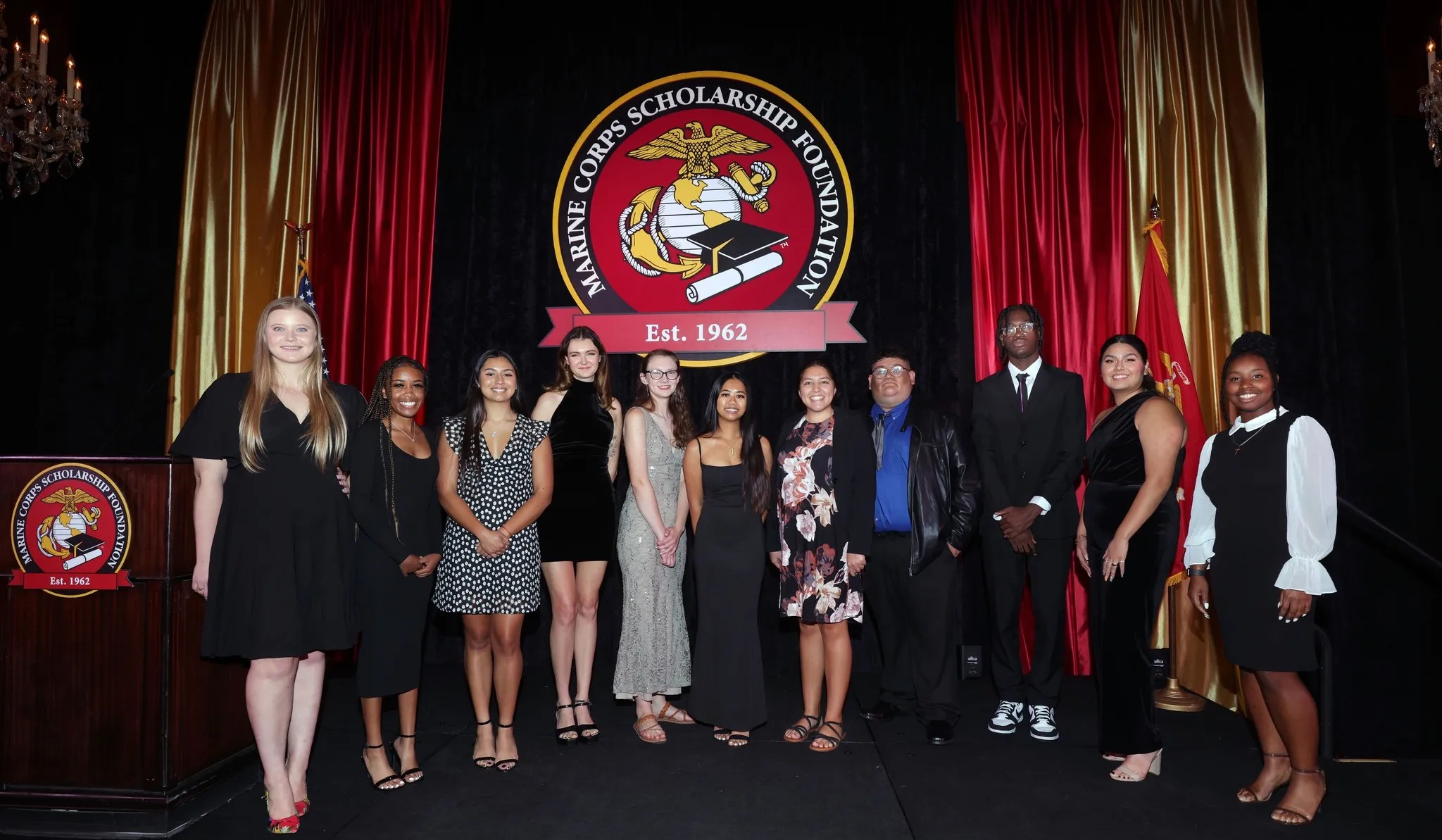
| Marine Corps Scholarship Foundation | College + trade | $2,500–$10,000 per year | Children of Marines / Navy Corpsmen | Jan 1 – Mar 1 |
| Dolphin Scholarship Foundation | College + vocational | $1,500–$4,500 per year | Submarine Force dependents and spouses | Oct 1 – Mar 15 |
| Air Force Aid Society (Hap Arnold Grant) | College | Varies (need-based; commonly up to $2,000) | AF / Space Force children and spouses | Opens Jan; closes Apr 30 |
| Coast Guard Foundation | College + trade | $2,500 or $5,000 | Coast Guard dependents | Feb 1 – Apr 1 |
| American Legion Legacy Scholarship | College + grad | Up to $20,000 (fallen) / $5,000 (disabled) | Children of post-9/11 fallen or 50%+ disabled | Opens Jan 1; closes Apr 1 |
| Children of Fallen Patriots | College + trade | Up to $6,250 per year | Children who lost a parent in the line of duty | Rolling |
| Freedom Alliance Scholarship Fund | College + trade | Varies; renewable up to 4 terms | Children of fallen / 100% disabled heroes | See site (annual) |
| Military Order of the Purple Heart | College | Varies | Purple Heart recipients' families | Opens Feb 1; closes May 1 |
| Folds of Honor | K–12 private + college | Up to $2,500 per term | Dependents/spouses of fallen or disabled | Feb 1 – Mar 31 |
| ThanksUSA | College + vocational | $3,000 each | Active-duty dependents and spouses | Mar – May 15 |
| Fisher House – Heroes' Legacy | College | Set by annual funding | Children of post-9/11 fallen/100% disabled | Opens Dec |
| Florida Family Empowerment Scholarship | K–12 private | Varies by district | Florida K–12 students, income tiers | Rolling |
| Arizona Empowerment Scholarship Account (ESA) | K–12 private / homeschool | Varies by year | Arizona K–12 students | Rolling (opens Jan) |
| Texas Armed Services Scholarship (TASSP) | College + ROTC | Up to state-set amount | Texas students committing to ROTC/service | Jan – May |
| Georgia Military Scholarship | College (GMC) | Full tuition | Georgia residents, Guard commitment | Oct – Feb |
Federal education benefits for military dependents
Before applying to private scholarships, check the federal benefits. They are often larger, and you can usually combine them with the private programs below.
- Chapter 35 (Survivors' and Dependents' Educational Assistance): a monthly payment for the child or spouse of a veteran who is permanently and totally disabled from service, or who died from a service-connected cause. It can run up to 36 months of full-time study.
- Fry Scholarship: for the child or spouse of a service member who died in the line of duty on or after September 11, 2001. It pays tuition and fees, a housing allowance, and books.
- Transferred Post-9/11 GI Bill: a service member can transfer unused GI Bill months to a spouse or child. The child may also qualify for Yellow Ribbon funding at a private school.
- MyCAA / SpouseWorks: a Department of Defense program that pays up to $4,000 toward a license, certification, or associate degree for eligible military spouses.
These are benefits, not competitions, so everyone who qualifies receives them. Treat private scholarships as the layer that fills the gap after federal and state aid is applied.
A. Military-affiliated organizations
Most military-dependent scholarships come from this group: nonprofits and relief societies tied to a branch of service. They tend to weigh financial need, GPA, and the sponsor's service record.
1. Fisher House Foundation – Scholarships for Military Children
Details: $2,000 scholarships for children of active duty, Reserve/Guard, retired, or deceased service members from any branch. The program is run by the Fisher House Foundation with the Defense Commissary Agency, and at least one award is made at each participating commissary. Applicants write a short 500-word essay; the topic is posted when the application opens.
Number of Grants: 500 scholarship grants of $2,000 each, for a total of $1 million a year.
Qualification:
- Unmarried military dependent children under age 23 who hold a valid Uniformed Services Identification (USID) card.
- The parent or sponsor must be active duty, Reserve/Guard, retired, or deceased from the Army, Marine Corps, Navy, Air Force, Coast Guard, or Space Force.
- Must be enrolled or planning to enroll full time in a bachelor's program, or in a community/junior college program designed to transfer directly into a four-year school.
- High school applicants need a minimum cumulative GPA of 3.0 on a 4.0 scale. College applicants need a minimum 2.5, and first-year students must submit a first-semester college transcript.
- Applicants who already hold a full scholarship or a service academy appointment are not eligible.
Application Period: The 2026–27 cycle closed on February 11, 2026. The application for the 2027–28 academic year opens in December 2026.
Website: Fisher House Foundation – Scholarships for Military Children
2. Marine Corps Scholarship Foundation (MCSF)
Details: Need-based scholarships for children of Marines, and of Navy Corpsmen, Chaplains, and Religious Program Specialists attached to a Marine Corps unit. Funds go toward undergraduate and career/technical education.
Number of Grants: Not fixed. For 2026–27 the foundation awarded $12.635 million to 2,906 students. Individual awards are $2,500, $5,000, $7,500, or $10,000 per year. Children of the Fallen receive a guaranteed $30,000 over four years, and Children of the Wounded receive up to $40,000 over four years.
Qualification:
- Child or stepchild of an active duty, Reserve, or veteran U.S. Marine, or of a Navy Corpsman, Chaplain, or Religious Program Specialist attached to a Marine Corps unit, including those killed in service.
- Minimum 2.00 GPA.
- Demonstrate financial need through a family adjusted gross income of $134,000 or less for the 2025 tax year.
- Must attend a school eligible for federal funding. Veteran parents must have an honorable discharge.
Application Period: Opens January 1 and closes March 1 each year. Award decisions are emailed by May 31.
Website: Marine Corps Scholarship Foundation
3. Dolphin Scholarship Foundation
Details: Scholarships for children, stepchildren, and spouses of the U.S. Navy Submarine Force, awarded on academic achievement, extracurricular activities, and community involvement.
Number of Grants: Roughly 30–40 new awards a year, with about 110 students sponsored at any time. Annual grants range from $1,500 to $4,500 and can reach $18,000 over eight semesters.
Qualification:
- Dependent of a current or former Submarine Force member who served at least 6 years on active duty, or 8 years in submarine support activities.
- Unmarried and under age 24 at the March 15 deadline (for dependent children).
- A high school senior, or currently enrolled in college, vocational, or technical school.
- Pursuing a first associate's or bachelor's degree, or a vocational/technical certification.
- Students attending a military service academy (USNA, West Point, USCGA) are not eligible.
Application Period: New applications open October 1 and close March 15 each year.
Website: Dolphin Scholarship Foundation
4. Air Force Aid Society – General Henry H. Arnold Education Grant
Details: Need-based education grants for children and spouses of Air Force and Space Force members. Also known as the Hap Arnold Grant, and applying to it opens the door to the AFAS Merit and Grit Scholarships and the interest-free supplemental loan program.
Number of Grants: Not fixed. Award amounts vary based on the number of applicants, the approved budget, the applicant's Student Aid Index (SAI) from the FAFSA, and the cost of attendance (commonly cited as up to $2,000).
Qualification:
- Child (who will not turn 24 during the award year) or spouse of an eligible Air Force or Space Force member — active duty, Title 10 Reserve/Guard on extended active duty, Title 32 Guard on full-time active duty, certain retired categories, or deceased.
- A high school graduate enrolled or accepted as a full-time undergraduate at an accredited college, university, or vocational/trade school.
- Minimum cumulative 2.0 GPA and in good standing.
- Not a graduate or professional student, and not a veteran or a member of another branch.
Application Period: Opens in January and closes April 30.
Website: Air Force Aid Society – Hap Arnold Education Grant
5. Coast Guard Foundation – Dependent Scholarships
Details: Scholarships for children of Coast Guard members. The foundation also runs a Fallen Heroes Scholarship that covers 100% of higher-education costs for children of Coast Guard members who died in operational, line-of-duty service.
Number of Grants: In 2026 the foundation awarded 347 scholarships totaling $1.4 million, plus nine Fallen Heroes Scholarships. Standard awards are $2,500 or $5,000 and can be renewed for up to four years.
Qualification:
- Dependent child of an active duty, Reserve (180+ days active), or retired Coast Guard member, enlisted or officer.
- A graduating high school senior, or a student already enrolled in college or trade school.
- Selection considers academic achievement, leadership, community involvement, and financial need. A FAFSA report is required.
Application Period: Opens February 1 and closes April 1.
Website: Coast Guard Foundation – Scholarships
6. The American Legion Legacy Scholarship
Details: A needs-based scholarship for children of service members who died on active duty on or after September 11, 2001, and for children of post-9/11 veterans with a combined VA disability rating of 50% or higher. It is designed to close the gap left after all federal and state aid is applied.
Number of Grants: Varies by year. For 2026, 669 awards totaling over $1.7 million were granted. Up to $20,000 is available for children of the fallen and up to $5,000 for children of the disabled. Recipients may reapply up to six times.
Qualification:
- Child, adopted child, or stepchild of a U.S. service member who died on active duty on or after September 11, 2001.
- Or the child of a post-9/11 veteran with a combined VA disability rating of 50% or higher.
- May be used for undergraduate, graduate, or trade study at an accredited institution.
Application Period: Opens January 1 and closes April 1 (confirm the exact date for the current year).
Website: The American Legion – Legacy Scholarship
7. Children of Fallen Patriots Foundation
Details: Provides college and trade school scholarships, educational assistance, and career support to military children who lost a parent in the line of duty.
Number of Grants: Rolling. More than $82 million has been awarded to over 4,000 children since 2002. Students can receive up to $6,250 in assistance per academic year.
Qualification:
- Child of a U.S. service member (Army, Navy, Air Force, Marine Corps, or Coast Guard) who died in the line of duty.
- Enrolled or planning to enroll in an undergraduate, vocational, or trade program.
- No strict age limit; applicants over 33 are reviewed case by case.
Application Period: Rolling admissions; applications are reviewed monthly.
Website: Children of Fallen Patriots Foundation
8. Freedom Alliance Scholarship Fund
Details: Scholarships for children of service members who were killed, or became 100% totally and permanently disabled, as a result of a combat mission or training accident.
Number of Grants: Not fixed; award amounts vary. The scholarship is awarded once per academic year and is renewable for up to four terms.
Qualification:
- Dependent son or daughter of a U.S. Soldier, Sailor, Airman, Marine, or Guardsman who was killed in action; became 100% totally and permanently disabled from a combat mission or training accident; suffered a major limb amputation from enemy action; is a Prisoner of War or Missing in Action; or was awarded the Medal of Honor, Navy Cross, Distinguished Service Cross, Air Force Cross, or Coast Guard Cross.
- A high school senior (spring semester), a high school graduate, or a full-time undergraduate, vocational, or trade school student.
- First degree only. Applicants who already hold an undergraduate degree are not eligible.
- Must be under age 26 at the time of application. Students with prior college coursework need a 2.0+ cumulative GPA.
Application Period: Accepts applications through the year; check the site for the current cycle.
Website: Freedom Alliance Scholarship Fund
9. Military Order of the Purple Heart Scholarship
Details: A competitive program that awards scholarships to Purple Heart recipients and their spouses, children, and grandchildren. It also covers the families of recipients killed in action or who died of wounds.
Number of Grants: Varies each year. At least one applicant with military service receives the Navy SEAL LT Michael Murphy Memorial Award. Amount varies.
Qualification:
- A Purple Heart recipient who is a member of the MOPH; or the spouse or a direct lineal descendant (child, stepchild, adopted child, grandchild, or great-grandchild) of a Purple Heart recipient who is a member.
- Also open to the spouse or a direct lineal descendant of a service member killed in action or who died of wounds.
- A graduate or upcoming graduate (current senior) of a high school or GED program.
- Two letters of recommendation are required. A student may receive a maximum of two awards, in non-consecutive years.
Application Period: The application is posted February 1, and must be received by 5:00 p.m. ET on May 1 (no exceptions).
Website: Military Order of the Purple Heart – Scholarship Program
B. National and private scholarship organizations
These programs are national in scope and are open to military families across all branches. Several can also be used for private K–12 tuition.
10. Folds of Honor
Details: Educational scholarships for the dependents and spouses of service members who were killed or disabled while serving. Awards can be applied to private K–12 tuition, college, or trade school, which makes this one of the more flexible options for military families using a private school.
Number of Grants: Thousands awarded annually. Awards are need-based and run up to $2,500 per term (up to $1,250 for part-time students).
Qualification:
- Dependent child or spouse of a fallen or disabled U.S. service member.
- Awards may be used for K–12 private education, college, or technical/trade programs.
- Need-based; the current FAFSA is required.
Application Period: Opens February 1 and closes March 31.
Website: Folds of Honor
11. ThanksUSA Scholarships
Details: Need-based scholarships for military spouses and dependent children pursuing college, technical, or vocational education.
Number of Grants: Hundreds of $3,000 scholarships each year.
Qualification:
- Spouse or dependent child (age 24 or under) of an active duty U.S. military service member.
- Planning to enroll full time in an accredited two-year or four-year college, university, vocational, or technical school.
- Minimum 2.5 cumulative GPA on a 4.0 scale.
- Preference is given to children or spouses of service members killed or injured on active duty.
Application Period: Opens in March and closes May 15.
Website: ThanksUSA
12. Fisher House Foundation – Heroes' Legacy Scholarship
Details: Scholarships for children of service members who died, or became seriously and permanently disabled, on active duty since September 11, 2001. A disability here is defined as one that qualifies the service member for Traumatic Servicemembers' Group Life Insurance (TSGLI) benefits or a 100% permanent and total disability rating.
Number of Grants: The number and amount awarded each year depend on that year's funding. The program has grown from 23 recipients to 1,265 annually, with over $18 million awarded to date.
Qualification:
- Dependent, unmarried child under age 23 of a service member who died on active duty after September 11, 2001, or who has a 100% permanent and total disability or a TSGLI-qualifying injury.
- Enrolled full time in a U.S. accredited two-year or four-year undergraduate program.
- Minimum GPA: 3.0 in high school, 2.5 in college, on a 4.0 scale.
Application Period: Opens in December. The 2026–27 window closed and the next opens in December 2026 for 2027–28.
Website: Fisher House Foundation – Heroes' Legacy Scholarship
C. State-based programs
Several states fund scholarships or education accounts that military families can use for private school tuition. These are run by state agencies, so eligibility and amounts vary widely. Contact your state's department of education to confirm current rules.

13. Florida – Family Empowerment Scholarship
Details: State scholarships that let eligible K–12 students, including children of military families, attend a private school or use other approved education options. Income tiers apply, and priority is given to students whose household income does not exceed 185% of the federal poverty level, or who are in foster or out-of-home care.
Number of Grants: Varies by year and by district.
Qualification:
- Must be a Florida resident.
- Priority to households at or below 185% of the federal poverty level; then to households between 185% and 400%.
- Must meet the state's K–12 eligibility and enrollment rules.
Application Period: Rolling; early application is recommended.
Website: Florida Department of Education – Family Empowerment Scholarship
14. Arizona – Empowerment Scholarship Account (ESA)
Details: State-funded education accounts that eligible students, including children of military families, can use for private school tuition, homeschooling, and other approved educational expenses.
Number of Grants: Varies by year.
Qualification:
- Must be an Arizona resident.
- Must meet the state's criteria (for example, special needs or attending a low-performing school, depending on the current law).
- Funds are limited to approved educational expenses.
Application Period: Rolling; applications typically open in January.
Website: Arizona Department of Education – Empowerment Scholarship Account
15. Texas Armed Services Scholarship Program (TASSP)

Details: Scholarships for Texas students who commit to a four-year ROTC program and a four-year commitment to military service.
Number of Grants: Varies by year; the award amount is set by the state.
Qualification:
- A high school senior (or equivalent) in Texas.
- Minimum 2.5 GPA.
- A score of 1000 on the SAT or 20 on the ACT.
- Commitment to a four-year ROTC program and a four-year military service obligation.
Application Period: Opens in January and closes in May.
Website: Texas Higher Education Coordinating Board
16. Georgia Military Scholarship
Details: Full-tuition scholarships to attend Georgia Military College for students who commit to serving in the Georgia Army National Guard after graduation.
Number of Grants: Varies by year.
Qualification:
- Must be a Georgia resident.
- Must meet the eligibility requirements set by Georgia Military College.
- Commitment to serve in the Georgia Army National Guard upon graduation.
Application Period: Opens in October and closes in January (confirm the exact date with the college).
Website: Georgia Military College
Scholarships for private K–12 school
Most programs on this list are built for college, so families paying private K–12 tuition have fewer options. These are the ones that can actually be applied to elementary or high school costs:
- Folds of Honor: the most flexible option. Awards can go to private K–12 tuition, and it is open to dependents and spouses of fallen or disabled service members.
- State education accounts: Florida's Family Empowerment Scholarship and Arizona's Empowerment Scholarship Account can both be used for private school. Rules and amounts vary by state, so check your own department of education.
- School-based aid: many private schools run their own need-based assistance for military families. Ask the school's admissions or financial aid office directly.
Which scholarship should you apply to?
Use these short prompts to narrow the list before you start writing essays.
- If you lost a parent in the line of duty: start with Children of Fallen Patriots, the American Legion Legacy Scholarship, Heroes' Legacy, and Folds of Honor.
- If a parent serves in a specific branch: apply to your branch programs first (MCSF for Marines, Dolphin for Submarine Force, Hap Arnold for Air Force and Space Force, Coast Guard Foundation for Coast Guard).
- If you need private K–12 tuition: Folds of Honor plus your state education account.
- If you are a spouse: see our dedicated guide to military spouse scholarships.
- If you have a strong GPA and test score: add Texas TASSP or the Georgia Military Scholarship if you are a resident and open to ROTC or Guard service.
What documents you'll need
There is no single application, but almost every program asks for the same packet. Gathering these once makes the next applications much faster.
- A valid military ID (USID) and DEERS enrollment for the dependent.
- The sponsor's service documents, such as a DD-214 (discharge), DD-1300 (casualty report), current orders, or an LES.
- High school and, if applicable, college transcripts.
- The FAFSA, which produces your Student Aid Index (SAI). Most need-based programs require it.
- Income documentation, usually a recent tax return for the family adjusted gross income.
- A short essay, often around 500 words on a topic the program sets.
- One or two letters of recommendation.
- Proof of enrollment or an acceptance letter.
Key terms explained
- Dependent: a child or spouse of a service member.
- USID card: the Uniformed Services Identification card that proves dependent status.
- DEERS: the Defense Enrollment Eligibility Reporting System that confirms who qualifies as a dependent.
- DD-214: the record of a service member's discharge from the military.
- DD-1300: the report filed when a service member dies on active duty.
- SAI: the Student Aid Index, the number the FAFSA produces to measure financial need.
- P&T: permanent and total disability rating from the VA.
- TSGLI: Traumatic Servicemembers' Group Life Insurance, used here as a disability threshold.
- TASSP: the Texas Armed Services Scholarship Program.
- ESA: an Empowerment Scholarship Account, a state education savings account.
Programs that are not dependent scholarships
Two programs often appear on military scholarship lists but are not designed for children or spouses in the usual sense. Worth knowing, but do not count them as dependent aid:
- Pat Tillman Foundation – Tillman Scholars: for active duty service members, veterans, and military spouses pursuing a degree. It is not open to dependent children.
- The Mission Continues: a service fellowship program for post-9/11 veterans. It is not a traditional scholarship, and educational funding is not guaranteed.
Questions and answers
What are some common eligibility requirements for scholarships for military dependents?
Most programs look at a mix of academic performance (GPA), financial need, the sponsor's branch and duty status, and sometimes community service or leadership. Many require a short essay, a copy of the service member's documents (such as a DD-214 or DD-1300), transcripts, and a valid military ID. A few programs also set age limits, usually under 23 or 24 for dependent children.
Where can I find scholarships for military dependents?
Start with the programs in this guide, then widen your search:
- School counselors and private school administrators
- Branch relief societies such as Army Emergency Relief, Navy-Marine Corps Relief Society, and the Air Force Aid Society
- State departments of education for K–12 private school programs
- Scholarship databases such as Fastweb, Scholarships.com, and Cappex
- The website of the specific private school, which often lists its own aid and scholarships
Are there scholarships specifically for military dependents attending private schools?
Yes. The clearest examples are the state K–12 programs in Section C, such as Florida's Family Empowerment Scholarship and Arizona's Empowerment Scholarship Account. Folds of Honor is also flexible and can be applied to private K–12 tuition. Most other programs on this list are for college or vocational study, so check the "Best for" column before applying.
Can military spouses apply for these scholarships?
Several of them are open to spouses, not just children. Dolphin Scholarship Foundation, the Air Force Aid Society Hap Arnold Grant, ThanksUSA, and Folds of Honor all include spouses. If you are looking mainly for spouse funding, our full guide to military spouse scholarships covers the spouse-only programs in more detail.
What should I do if I miss a scholarship deadline?
If the deadline has passed, you usually cannot apply for that cycle. Check whether the program runs annually and set a reminder for the next opening, and contact the provider to ask about late or upcoming cycles. Many of these programs open in the same month every year, so the pattern is easy to track.
Do I need a military ID or DEERS enrollment to apply?
In many cases, yes. Programs such as Scholarships for Military Children verify eligibility through the USID card and the DEERS database, and the Coast Guard Foundation checks DEERS for reserve dependents. If you are eligible for an ID card but do not have one, schedule a visit to a military personnel office well before the deadline.
How to make your application stand out
- Write a specific essay. Use one real story or moment rather than a list of achievements. If the prompt asks about service or sacrifice, answer it directly.
- Match the essay to the program. A 500-word prompt for one scholarship is not the same as a personal statement for another. Read the question and answer it.
- Get strong letters. Ask a teacher, coach, mentor, or unit leader who knows you well and can give a concrete example.
- Show leadership and service. Many selection committees weigh community involvement as much as GPA.
- Keep documents ready. Transcripts, military IDs, and DD-214/DD-1300 forms take time to request, so start early.
Common mistakes to avoid
Small errors sink more applications than weak grades do. These are the ones we see most often (and we cover more in our guide to common scholarship application mistakes):
- Applying to a program you do not qualify for because of the income cap, GPA, or branch rule.
- Missing the age limit (most dependent programs cap at 23 or 24).
- Using a saved essay that does not answer the current prompt.
- Waiting until the last day, when recommendation letters and transcripts are hard to chase down.
- Assuming one scholarship is enough. Apply to several programs you qualify for.
Sources and how we verified this
Every amount, deadline, and eligibility rule in this guide was checked against the official program websites in October 2026. Scholarship details change every cycle, so always confirm on the provider's page before you apply.
- Fisher House Foundation – Scholarships for Military Children
- Marine Corps Scholarship Foundation – mcsf.org
- Dolphin Scholarship Foundation – dolphinscholarship.org
- Air Force Aid Society – Hap Arnold Education Grant
- Coast Guard Foundation – Scholarships
- The American Legion – Legacy Scholarship
- Children of Fallen Patriots Foundation – fallenpatriots.org
- Freedom Alliance – Scholarship Fund
- Military Order of the Purple Heart – Scholarship Program
- Folds of Honor – foldsofhonor.org
- ThanksUSA – thanksusa.org
- Fisher House Foundation – Heroes' Legacy Scholarship
- Florida Department of Education – Family Empowerment Scholarship
- Arizona Department of Education – Empowerment Scholarship Account
- Texas Higher Education Coordinating Board – TASSP
- Georgia Military College – gmc.edu
- U.S. Department of Veterans Affairs – Chapter 35 (DEA), Fry Scholarship, and transferring Post-9/11 GI Bill benefits.
- Department of Defense – MyCAA / SpouseWorks
Scholarship amounts, eligibility rules, and deadlines change every cycle. Every figure in this guide was checked against the official program websites in October 2026. Always confirm details on the provider's site before you apply.
Comments
No comments yet. Be the first to share your thoughts.